Free as the Ocean
  • HOME
  • OUR STORIES / BLOG
    • STORIES FROM THE OCEAN
    • STORIES FROM AROUND THE WORLD
      • Russia
      • Japan
      • Hong Kong
      • China
      • Tibet
      • Nepal
      • Malaysia
      • Indonesia
      • Sri Lanka
      • India
      • Thailand
      • Myanmar
      • Laos
  • TRAVEL PHOTOGRAPHY
    • NORTHEAST ASIA
      • Russia
        • Moscow
        • Irkutsk
        • Listvyanka
        • Vladivostok
      • Japan
        • Tokyo
        • Yokohama
        • Kamakura
        • Hakone and Lake Ashi
        • Osaka
        • Kyoto
        • Nara
        • Hiroshima
      • China
        • Hong Kong
        • Guilin
        • Zhangjiajie
        • Shanghai
        • Beijing
        • The Great Wall
      • Tibet
        • Lhasa
        • The Himalayas
    • SOUTHEAST ASIA
      • Malaysia
        • Kuala Lumpur
        • Kutching and Bako N.P.
        • George Town
      • Indonesia
        • Bukit Lawang
        • Lake Toba
        • Bromo and Ijen
        • Yogyakarta
      • Thailand
        • Bangkok
        • Phuket
      • Myanmar
        • Mandalay
        • Bagan
        • Yangon
      • Laos
        • Mekong Cruise
        • Luang Prabang
        • Nong Kiaw
    • SOUTH ASIA
      • Nepal
        • Kathmandu
        • Chitwan
      • Sri Lanka
        • Colombo
        • Kandy
        • Ella
        • Dambulla
        • Mirissa
        • Galle
      • India
        • Bengaluru
        • Jaisalmer
        • Jodhpur
        • Jaipur
        • Agra
        • New Delhi
    • SOUTH AMERICA
      • Argentina
        • Buenos Aires
        • Ushuaia
        • Perito Moreno
      • Chile
        • San Pedro de Atacama
  • TRAVEL ABC
  • CONTACT
  • | DEUTSCH
  • Click to open the search input field Click to open the search input field Search
  • Menu Menu
Japan

Hakone Onsen, Lake Ashi and Mount Fuji

Hakone is placed in the mountain area, offering easy access to one of the five lakes surrounding Mount Fuji and a spectacular view of Japan’s most iconic mountain in days with a clear sky.

From Hadano we took the train to Odawara, and changed there for the Hakone-Yumoto station, from where a small bus took us to Tenzan Onsen for a fare of 100 yen.


Onsens are Japanese natural hot springs widely spread across Japan, due to it being a volcanically active country. When visiting an Onsen you will get acquainted with two names, depending on the place you are planning to visit: Rotenburo (the outdoor hot spring and the best option to choose if you ask us) and Sento (the indoor public bathhouse that is supplied by ordinary heated water).

The Onen is one of the “must-do” things to experience in Japan if the people here and the delicious food did not convince you already to fall in love with this country.

There are a few etiquette related details that you need to know before visiting the hot springs:

  • It is not a place for shy people. Why? Well, there are no clothes allowed inside. You will find lockers where you can deposit your stuff and after wearing just your birthday suit, you will need to head to the showers before entering the hot waters. Don’t skip the shower! It is common in Japan that people always clean themselves under the shower before soaking in the bath, even in the privacy of their home, so seeing someone not doing it, especially in public baths, is considered pretty gross.
  • Try to keep your head above the water and, if your hair is long, wrap it in a small towel. Nobody likes to take a bath while being surrounded by other people’s hair.
  • No tattoos are allowed. There is a strict rule against tattoos, as wearing them is related to members of organized crime groups. But if you have one and it isn’t very visible, you might still be allowed to enter.
  • Onsens are quiet places. Don’t make noise inside and refrain from speaking aloud.

Inside an Onsen you will probably find restaurants, coffee places and a space where you can enjoy a relaxing massage. If none of these is desired, there is usually space where people can just lay down and relax after the bath. Some people even sleep there.

After visiting the Onsen we decided to benefit from the good weather and take the next bus to Lake Ashi. The ride to the lake was more expensive than the one to the Onsen but totally worth it. The lake is beautiful and offers an easy trek around it. For those who want to explore the surroundings in a more touristic way, there is the option to sail on the lake for 30 minutes and after take the cable car to the top of the nearby mountain from where they can admire a splendid view of Mount Fuji.

We decided to go trekking and visit the Shrine next to the lake. For visitors with less time for stopovers we recommend grabbing a snack and a (surprisingly good) coffee at the 7Eleven in the bus station.
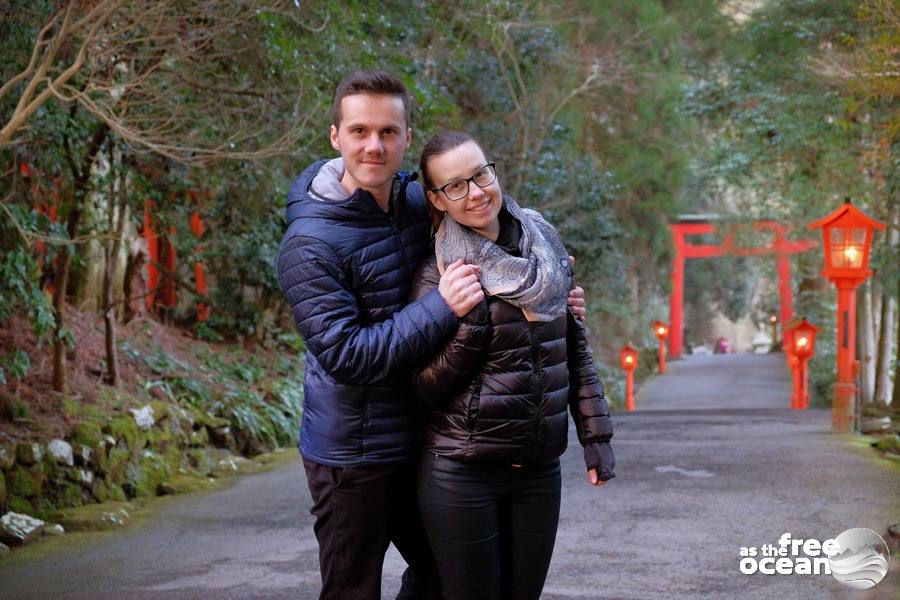
LAKE ASHI JAPAN


We returned from the Shrine exactly when the sun was going down and so we could witness one of the most beautiful sunsets we experienced in Japan, revealing the shape of Mount Fuji in the background and a mystic and quiet atmosphere.
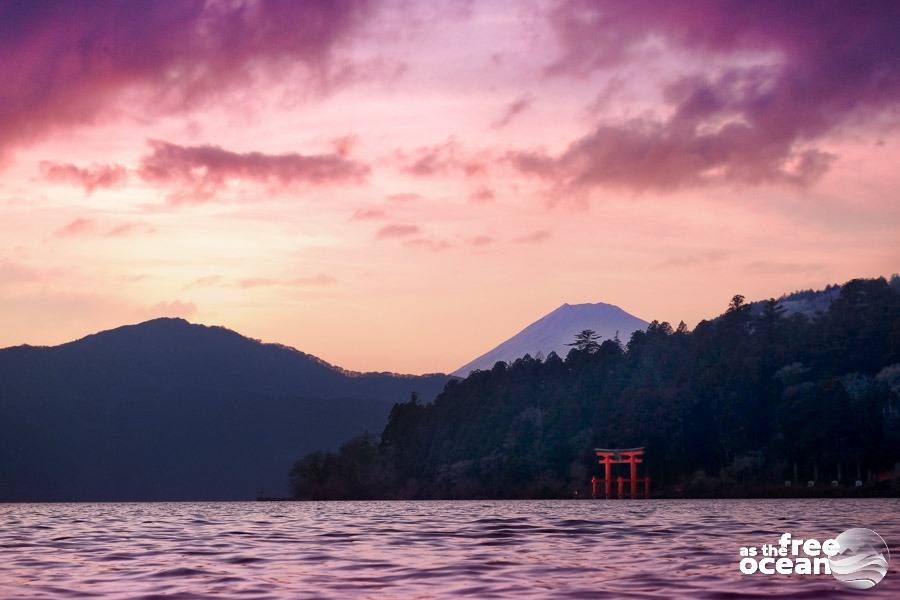
LAKE ASHI JAPAN


One hour-long ride with the bus (we paid 1200 Yen for one ticket) took us directly to the Odawara station, from where we took the train back to Hadano.

Ashi is just one of the five lakes that are best rated for enjoying a spectacular view of Mount Fuji and, combined with the visit at one of the Onsens, we can promise it will become an unforgettable experience.

Click here for more pictures.

March 31, 2018/by Ndu
http://www.freeastheocean.com/wp-content/uploads/2019/07/ASHI-LAKE-2.jpg 600 900 Ndu https://www.freeastheocean.com/wp-content/uploads/2019/03/FREE-AS-THE-OCEAN-LOGO-WHITE-SMALL.png Ndu2018-03-31 14:01:412019-07-15 16:22:43Hakone Onsen, Lake Ashi and Mount Fuji
Japan

Yokohama

At the end of three days of rushing thru this incredible city, we felt it’s time to leave Tokyo behind and stop in a place where heavy traffic, large masses of people and the explosion of colorful lights are not anymore the main part of the urban landscape that describe so well the capital city of Japan. After just two hours of jumping from train to train (we thought we already understood how the railway system in Japan works, but we realized we didn’t) and changing the line after noticing that we are in the wrong train, we finally arrived at the Hostel Village in Yokohama.

Just 10 minutes walk from the station, we could abandon our backpacks in a really tinny room with tatami beds and went to breathe some air outside, in this city that suddenly felt so much more quiet compared to Tokyo.

Yokohama offered us a range of new experiences, one of them being the chance to explore the largest China Town in Asia. With a history of 150 years, Yokohama Chinatown has a population of about 3.000 to 4.000, although nowadays only few Chinese still live here. Big red lanterns, colorful signs of bars and restaurants and street food carts with steamy dumplings are inviting you to taste from the great variety of Chinese delicatessen.

YOKOHAMA JAPAN

We decided to start our new experience in our own traditional way, “coffee first”. But this time coffee was more a reason to feel disappointed before we even had a real chance to understand what the place had to offer. We found a small and simple coffee place that felt more inviting than the ones displaying big brands, like Starbucks or Caffé Veloce (widely spread in Japan). So we stopped here for a break and ordered two cappuccinos, for which we were asked to pay on the spot the highest price we had ever paid before for a coffee (approx. 5 euro per person). And so we learned that local places are not necessarily offering cheaper products than famous brands and that prices should always be checked in advance.

We continued our walk through China Town and later searched for something to eat before returning to the hostel. We were planning to start early the following day, to have enough time for all the touristic spots that we wanted to visit.

What to see in Yokohama

The new day welcomed us with beautiful weather. It was week-end and tourists were wandering everywhere, creating a nice atmosphere without leaving the impression of a crowded place. We first went to Osanbashi Pier, a spectacularly designed passenger ship terminal, where we had our lunch break and were looking for arriving ships. We even noticed a list with the cruise ships that had stops in Yokohama, three of them being part of Costa Cruise’s fleet. Suddenly we felt like we could probably never really disconnect from the memories of the life at sea that we experienced in the past since every encounter with the sea or with the ocean was bringing old memories back to life.

YOKOHAMA JAPAN


Later we had a walk through Yamashita Park and ended at Minato Mirai, Yokohama’s new city center and probably the most touristic area in the city. The main points of interest here are the Landmark Tower, which is the second tallest building and the 4th tallest structure in Japan and the 106 meters high Marine Tower that has also an observation deck for those looking for extraordinary panoramic viewpoints.

YOKOHAMA JAPAN
YOKOHAMA JAPAN
YOKOHAMA JAPAN
YOKOHAMA JAPAN
YOKOHAMA JAPAN
YOKOHAMA JAPAN


We decided to return to the hostel before it got too cold outside and on the way back we looked for a place to eat. A small local restaurant that looked clean and warm convinced us to step inside and check the menu. That evening we were introduced to the delicious Japanese dish called UDON, which we enjoyed so much that it convinced us to return even the second evening for another portion at the same restaurant. The second time it felt even better because the employees knew us already and welcomed us with warmer smiles. We think that the price of 4 Euro was more than fair for such a big and tasty portion of food, especially in Japan.

The following day we took a day trip to Kamakura, where we planned to see the bamboo forest and the giant statue of Buddha. The good weather has been on our side once again and made the day feel very pleasant.

The 5th of March has been our last day in Yokohama. The sun stopped being friends with us and brought us rainy clouds. So we canceled our plan to visit the Sankei-en garden and took the train to Shin-Yokohama, where we wanted to try traditional Ramen at the famous Ramen Museum. And if you are at least a bit of a noodle fan, we highly recommend visiting this place.

YOKOHAMA RAMEN MUSEUM


Ramen is a traditional Japanese noodle soup that plays an important role in the way the Japanese cuisine evolved in the past centuries. At the Ramen Museum you can find out everything about the history and the diversity of this dish. Furthermore, you can taste one of the many Ramen options at the restaurants inside the museum (the entry ticket comes with the compulsoriness to buy at least one dish per person at one of the restaurants). The atmosphere of ancient Japan is well described by the carefully designed interior, which for us made the Ramen experience a truly unique one.

We finished the afternoon with coffee at one of the places we started to enjoy in Japan, the Caffé Veloce, and later stopped in China Town for a snack, before returning to the hostel where we packed our backpacks for the next day.

We felt a bit tired and the thought at the two weeks stop that we planned after Yokohama felt like a very good idea. Our next destination was Hadano, in the Kanagawa Prefecture, where an old Japanese house would be the place of our first Workaway project.

For more pictures of Yokohama click here.

March 31, 2018/by Ndu
http://www.freeastheocean.com/wp-content/uploads/2019/07/YOKOHAMA-9.jpg 570 900 Ndu https://www.freeastheocean.com/wp-content/uploads/2019/03/FREE-AS-THE-OCEAN-LOGO-WHITE-SMALL.png Ndu2018-03-31 09:51:422019-07-14 13:17:27Yokohama
Japan

Kamakura

Kamakura is a small city, not far from Yokohama and Tokyo, surrounded by beautiful nature and temples, known also for the high number of seasonal festivals. Kamakura was designed as a small city only during the last century, but it’s existence goes far back in time, when it played an important role in Japanese history, as the former de facto capital of Japan and the seat of the shogunate and of the Regency during the Kamakura period.


What to see in Kamakura

It took us 50 minutes from our hostel to Kita-Kamakura station, from where we walked to Tokeiji, a small, beautiful and tranquil Buddhist temple and continued after to Tsurugaoka Hachimangu, a  Shinto shrine established in the 11th century and built in 1828 in the traditional Edo architectural style. The latter is the most important shrine in the area. Whatever direction you walk in, you will find plenty of temples, shrines and other historical monuments that make Kamakura a very popular tourist destination.

KAMAKURA JAPAN
KAMAKURA JAPAN
KAMAKURA JAPAN
KAMAKURA JAPAN
KAMAKURA JAPAN
KAMAKURA JAPAN
KAMAKURA JAPAN
KAMAKURA JAPAN


Our next stop was Hokokuji, an old temple, well known for its dense bamboo grove and the tea house offering a matcha reception. Walking through the bamboo forest was a beautiful experience and had an important place on our list of things to do in Japan. It is a small forest, crowded by local tourists, but it definitely felt pleasant being there and the short visit left us time also for checking out the big Buddha statue that was 50 minutes walk distance from Hokokuji.

KAMAKURA JAPAN


We arrived at Kotokuin temple one hour before it closed it gates to the public, but early enough to admire the monumental, outdoor bronze statue of the Buddha that makes the place so famous and to walk around the area and take pictures.

KAMAKURA JAPAN


We had another coffee break at the main station before saying goodbye to this small city, beautiful for his enchanting temples, narrow streets and surrounding nature, and returned to Yokohama.

For more beautiful pictures of Kamakura click here.

March 29, 2018/by Ndu
http://www.freeastheocean.com/wp-content/uploads/2019/07/KAMAKURA-12.jpg 600 900 Ndu https://www.freeastheocean.com/wp-content/uploads/2019/03/FREE-AS-THE-OCEAN-LOGO-WHITE-SMALL.png Ndu2018-03-29 18:40:222019-07-15 15:15:08Kamakura
Japan

3 days in Tokyo

We will tell you how you can enjoy the most beautiful sights without hurry and to the maximum, even if you are in Tokyo just for a long weekend or for a stopover. Here is our itinerary: 

 Arrival:

Depending on when you arrive at the airport, the first day is not much for sightseeing. We used our day of arrival to get some orientation, a first impression and to plan our next days. 

The best way to get to the city center is by bus or train from the airport. Depending on the way you would like to plan your stay in Japan, at the airport you can get various tickets for long-distance trains or buses that can be combined with the Tokyo Metro ticket. It is important that you buy it directly at the airport, as certain offers are only valid for tourists outside Japan and you get the best deals on the spot. 

Day 1:

We started our Tokyo explorer tour at Imperial East Garden. The metro went from Komagome to Nagatcho metro station and from there we took a short walk to the East Gate. Depending on what direction you come from, you can also get off at the stations Otemachi, Takebashi, or Nijubashi-mae. The access to the park is free of charge and it not only invites to linger but also offers an insight into Japanese culture and history.

TOKYO JAPAN

Right next to the park is the imposing Imperial Palace. Particularly impressive are the massive gates and bridges that lead to the Palace. Here we had a nice photo break because of the special atmosphere between the traditional palace and the modern skyscrapers. 

TOKYO JAPAN


Passing the Kusunoki Masashige Statue, we headed to the metro at the Meiji – Jingumae Station. From here we began the walk through the Yoygi Park along the so-called Torri (Gates) to the Meiji Shrine, which was dedicated to Emperor Meiji and his wife Shoken. We spent a lot of time here.

TOKYO JAPAN


In the evening during the blue hour (just before sunset) we marveled the lights and the happenings in Shibuya. Shibuya is probably the station that represents Tokyo best. The shopping district with its neon signs illuminate the streets in many colors. Apart from many lights and shops, the streets are filled with lots of people! If you want to see how many they are exactly, you should treat yourself with a coffee at Starbucks at the Shibuya crossing, where you can wait for the green light of the pedestrian lights and watch the streams of people. Madness!

We also had dinner in Shibuya, here you can find plenty of restaurants but beware: in Japan, often credit cards are not accepted in restaurants or hostels. That evening we went to bed with great impressions about the city.

TOKYO JAPAN

Day 2:

Day two took us to Shinjuku to the government building. The 243-meter high building itself is worth seeing, but the reason for our visit was the viewing platform. With the metro we reached the station Tochomae. From here, after the security control, you can get in the west or the south tower. Both towers have a viewing platform open to visitors from 09.30. Admission is free. The south tower is open until 17.00 and the north tower is open until 22.30. Note that some Mondays and Tuesdays during the month, one of the towers is closed. The view is incredible. You can see the other towers (Skytree and Tokyo Tower) as well as temples and parks.

TOKYO JAPAN


We were particularly lucky that day when we visited the tower, the sky was very clear and Mount Fuji showed us its imposing side. After a detailed visit, we have examined the stamp of the tower. We could find souvenir stamps with great symbols at many tourist places and metro stations.

TOKYO JAPAN


Our next stop was a culinary highlight, the Tsukiji fish market, the largest fish market in the world. It is easy to reach, from the Tsukiji metro station just follow the smell of the fish. In the big market, there are not only fish, but also many other treats for your heart desires. The market is expected to move this year. For early risers, a visit to the tuna auction gives visitors at around 3.00 in the morning the chance to witness the auction, which is worthwhile.
TOKYO JAPAN
TOKYO JAPAN
TOKYO JAPAN
TOKYO JAPAN
TOKYO JAPAN
TOKYO JAPAN


After a little refreshment at the fish market, we strolled through the Ginza district, known for its luxury shops and boutiques. The metro took us from Ginza to Kamiyacho Station, from where we could admire the Tokyo Tower, which resembles the Eiffel Tower (French people would probably contradict me). We decided not to go up there, as we already got a great view in the morning from the government building. In the towers, Tokyo Tower and Skytree, an entrance fee is required. But also from below they offer a great view.
TOKYO JAPAN


Our last night in Tokyo took us back to a colorful neighborhood, this time to Akihabara. The neighborhood with the eponymous metro station is the home of the anime and manga. Pure sensory overload! Not that we are the biggest manga or anime fans, but a visit is definitely worth it. The last evening we spent in our favorite Sushi restaurant (see post: Welcome to Tokyo). It was time again to say goodbye. 

TOKYO JAPAN

Departure: 

Due to the great traffic connections in Tokyo and everywhere in Japan, we used our last day before departure for a special highlight. After we said goodbye to our Hostel, we took the Metro to Asakusa, from where we were only a few steps away from Sensoji Temple. The oldest temple in Tokyo is surrounded by a market and offers a great view of the Skytree, the highest tower in the city. On and around the temple were many visitors, tourists and locals as well with kimonos. After a detailed exploration tour we went to our next city to Yokohama. 
TOKYO JAPAN


Our 3 days in Tokyo were a great success for us. Of course, the biggest city in the world can not be explored in 3 days and there was so much more to see in Japan. We are satisfied with our route, we saw everything we wanted and had enough time at the stops. Especially in the parks, we took a lot of time and witnessed the beginning of spring and flowering.

More of Tokyo? Click here for the gallery.

March 21, 2018/by Miriam
http://www.freeastheocean.com/wp-content/uploads/2019/07/TOKYO-2-FLARE.jpg 600 900 Miriam https://www.freeastheocean.com/wp-content/uploads/2019/03/FREE-AS-THE-OCEAN-LOGO-WHITE-SMALL.png Miriam2018-03-21 15:47:352019-07-14 12:00:453 days in Tokyo
Japan

Welcome to Tokyo!

Our time in the Russian Federation came to an end, when we boarded the flight from Vladivostok to Tokyo with the Russian airline S2. What we expected in the biggest city in the world? Rush, air pollution, industry …? Our first impression happened to be very different. What we noticed first: It was warm! In Russia we were constantly exposed to cold temperatures, between -6 °C to -24 °C. So the 13 °C that we were welcomed with at our arrival in Japan felt very pleasant.

Already at the immigration control everything was running fast and coordinated. We took the express train with 160 km / h directly into the city centre. At this point, it would have been cheaper to go by bus, but the experience was worth it. We bought a Combi-Ticket, which allowed us to use the subway in Tokyo for 72 hours.

When we arrived at Komagome Station near our hostel, we were surprised to find a peaceful place with nice houses and a small park. It was so incredibly quiet, even as we turned into the pedestrian area, it did not get louder. Maybe it was because people were just quiet, the cars were not honking or racing madly. Everyone here is integrated, respectful and considerate.

TOKYO JAPAN


When we found our small hostel after a little confrontation with Google Maps, we refreshed ourselves and set off to explore the area. In the street of our hostel there were many different restaurants. Actually, we were looking for sushi but a noodle house caught our attention. Unfortunately, we found nothing there to take our attention so we moved on. Suddenly a huge plastic sushi appeared in a window. We were not sure what to think about it, but we wanted to take a look inside anyway.

TOKYO JAPAN


The small restaurant (Izakaya) was completely empty, apart from a businessman that was quietly enjoying his dinner. Izakaya are typical Japanese restaurants, built like small bars with a counter, where you can also eat. You sit together with other guests at the bar and watch as the cook prepares the food. The friendly waitress, that could speak good English, gave us a place. The businessman, that was sitting right next to us, also spoke perfect English and immediately engaged us in a conversation.

The restaurant had a menu but only written in Japanese on wooden pieces. We understood that there was a large selection of sushi and the waitress explained the individual set menus. Each one of us chose a menu for 600 yen (about 4.60 euros) and a beer. Alex and I quickly understood that this was a great price, as the menu included 7 different Nigiri sushi, 6 different Maki, a bowl of miso soup and a little greeting from the kitchen.

JAPANESE FOOD TOKYO
JAPANESE FOOD TOKYO
JAPANESE FOOD TOKYO
JAPANESE FOOD TOKYO
JAPANESE FOOD TOKYO
JAPANESE FOOD TOKYO


Being a guest in Japan

With the time, the restaurant filled up and through the warm atmosphere we were quickly involved in the conversations with all the other costumers. We told them about our trip and they were very impressed by the idea. They also let us know that we have landed a real jackpot with this restaurant because as per them it was one of the best local restaurants in the area.

An elderly man wanted to offer us even more food and another gave us his business card and said we should definitely stop by his hotels when we are in the area. (Giving business cards is considered a great honor in Japan). Honestly, we were a bit overwhelmed with so much attention, but it was a very nice welcome to Tokyo. The older gentlemen left the restaurant after a short time as they had to go back to work. The farewell was very friendly and the waitress told us that one of them paid our full bill. We really would not have expected that. It was unbelievably nice and this positive first impression of this cosmopolitan city remained until the end.

The metropolitan area of Tokyo is home to more than 38 million people. Everything, but really everything is well thought out and no matter where you look, there is order and structure. But, nevertheless, tradition plays an important role in Japanese culture.

Would you like to see more pictures of Tokyo? Click here.

March 19, 2018/by Miriam
http://www.freeastheocean.com/wp-content/uploads/2018/03/SUSHI.jpg 600 900 Miriam https://www.freeastheocean.com/wp-content/uploads/2019/03/FREE-AS-THE-OCEAN-LOGO-WHITE-SMALL.png Miriam2018-03-19 12:41:322019-07-14 12:03:19Welcome to Tokyo!
Russia

The Trans-Siberian, a journey to remember

Trains are somehow magical. They fit so well in some of the most beautiful stories. Or at least that’s how I always used to perceive them. Some of the most enchanting journeys in the world are done by train and some trains go where other transportation methods are not offered a chance.

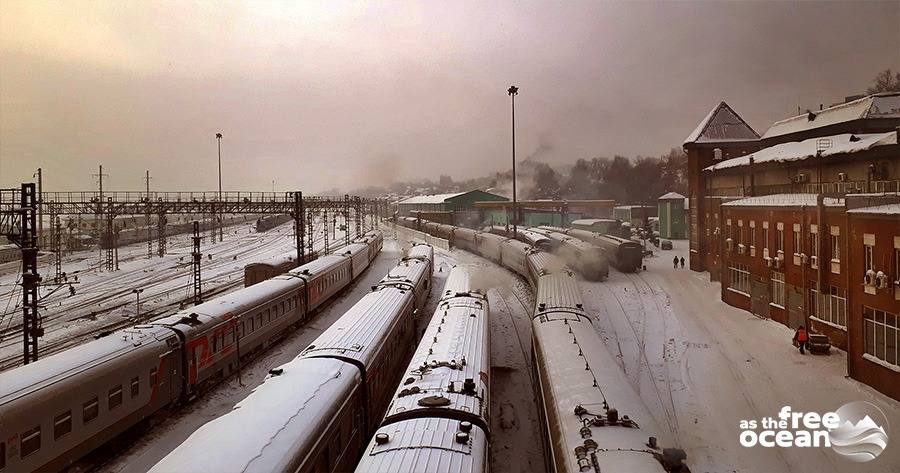
After a short stay in the Russian capital, we started our big adventure on board the Trans-Siberian line, a 9.289 kilometers long network of railways that connects Moscow with the Russian Far East and probably the best option to choose when it comes to crossing a wilderness of snow and ice-cold temperatures like we did.

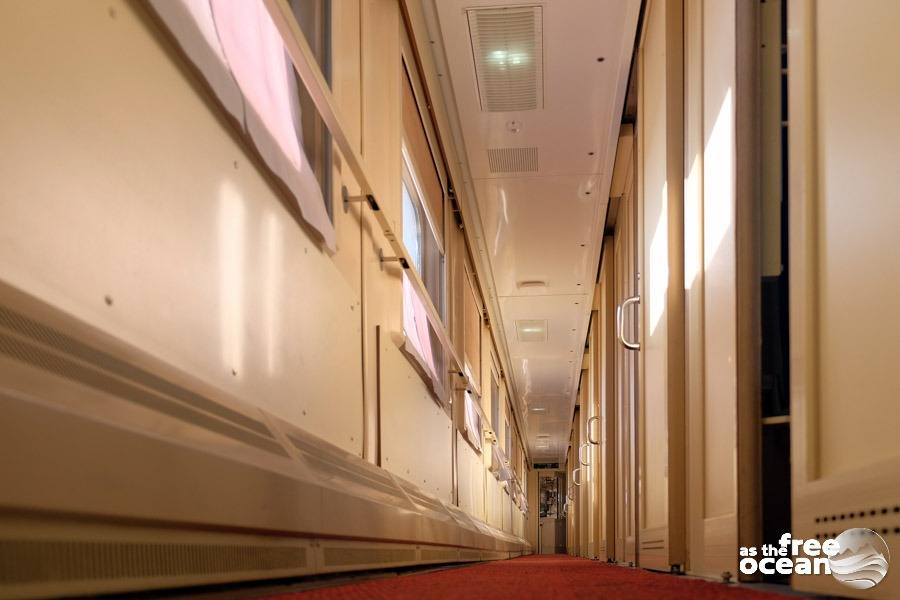
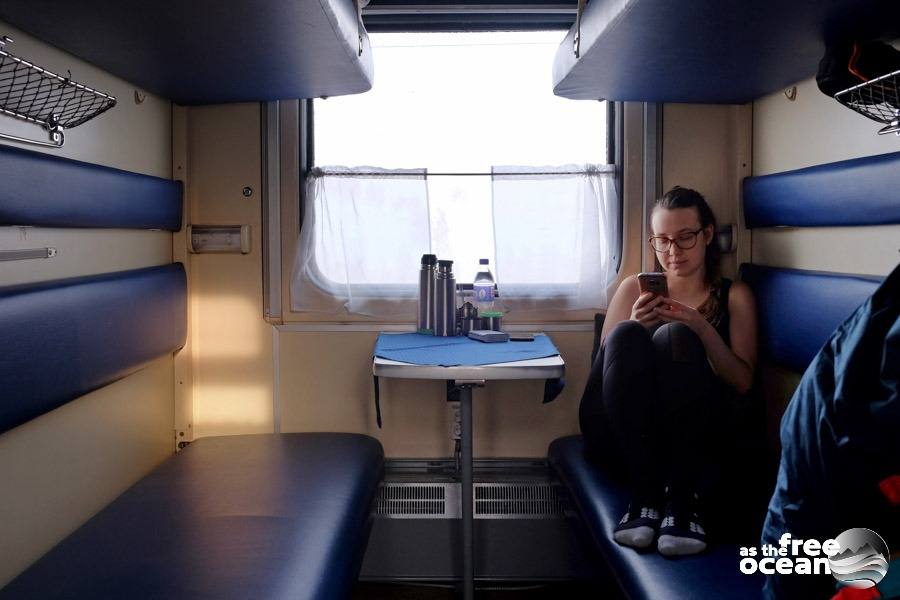
TRANS SIBERIAN RUSSIA


The Trans-Siberian journey begins

Our journey with the Trans-Siberian started on the 17th of March, late in the night. Feeling full of excitement and curiosity for how our trip would feel like, we waited patiently inside a coffee place at the station when the time table displayed the arrival time of the train that would bring us to Irkutsk, in the heart of Russia. The train happened to be full of friendly people that didn’t speak any English, or just a few words, but with whom we were still able to communicate and share at least a bit of our story.

It felt somehow hard to be trapped in a train for almost 4 days, but we enjoyed the warm temperature, the hot tea and the instant noodles that could be prepared right in our tiny cabin. We remembered how small our cabin onboard the cruise ship was and were laughing how small it became now.


TRANS SIBERIAN RUSSIA


There are a few things worth mentioning about the ride onboard the Trans-Siberian.

  • Every carriage has two responsible persons, called Provodnik (male) or Provodnitsa (female). They provide passengers with bed linen, answer questions if there are any, provide food and sweets or souvenirs on request, keep the carriage clean and they even wake you up before the arrival at the destination point.
  • There is always hot water available, so bringing tea, instant coffee or instant food with you is a good idea.
  • They have a restaurant. We cannot say much about prices and the quality of the food because we weren’t tempted to try it, as we have bought all the necessary things before departure. Still, in the second part of our trip, from Irkutsk to Vladivostok, we were offered a meal which was quite good.
  • Hygiene might be considered a problem, especially if the trip is longer than a day. There is no shower available, only a small toilet where you can use a small towel provided by the Provodnik to clean yourself.
  • It is safe to travel with. The Provodnik always makes sure that everyone boarding the train has a ticket and that everyone respects the other passengers.
  • It is fun. The landscapes are amazing and the experience itself is entertaining. For us it really felt like a trip to remember.

After our stay at Baikal Lake we boarded the train again. The trip to the end of the line lasted only three days and we had a bit more comfort because the train was newer and standards were higher than in the first one that brought us to Irkutsk. It was early in the morning and the first hours were probably the most entertaining of the whole trip. The part from Irkutsk to Ulan-Ude goes around the Baikal, offering amazing sceneries.

At the end of our trip we arrived in Vladivostok, the largest Russian port on the Pacific Ocean. The city offered a cold and grey landscape when we arrived, but the afternoon brought a blue sky and a bit of sun which made our short stay in the city feel pleasant.

The Trans-Siberian has been just the start of a long journey. It brought us far away from home and much farther we will continue going from here. A few pictures should help you get an idea of how it felt traveling across Russia by train.


Would you like to see some more pictures of Russia? Click here.

March 11, 2018/by Ndu
http://www.freeastheocean.com/wp-content/uploads/2019/07/IRKUTSK-1.jpg 600 900 Ndu https://www.freeastheocean.com/wp-content/uploads/2019/03/FREE-AS-THE-OCEAN-LOGO-WHITE-SMALL.png Ndu2018-03-11 17:16:132019-08-27 14:43:06The Trans-Siberian, a journey to remember
Russia

Vladivostok, at the end of our Trans-Siberian adventure

After three days in the Russian capital, other three in the middle of Siberia, exploring the mesmerizing landscape offered by the wilderness of forest, plains and cold semi-desert that surrounds the Baikal Lake, and another seven days onboard the Trans-Siberian, we finally arrived at our last destination in the Russian Federation, Vladivostok, the largest Russian port on the Pacific Ocean.

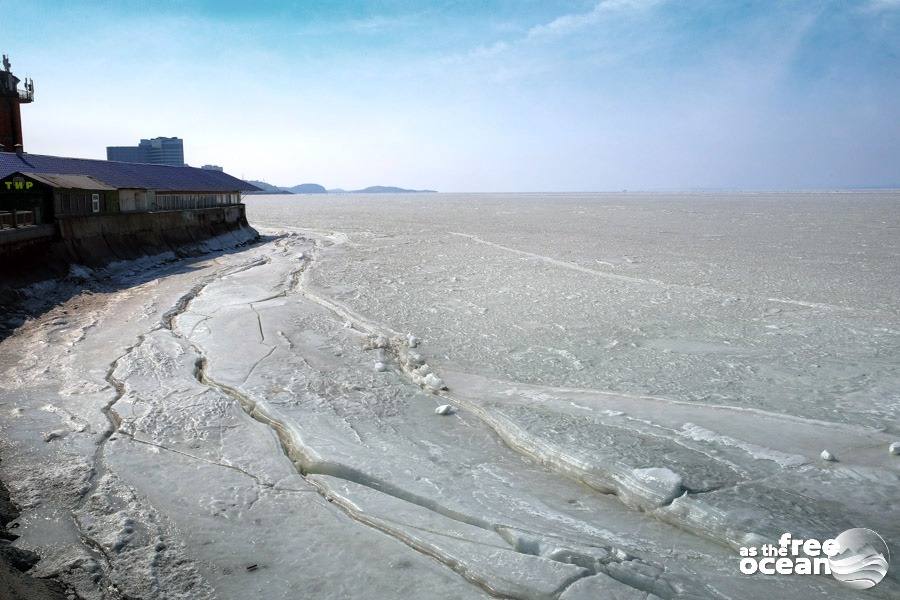
VLADIVOSTOK RUSSIA


The unofficial capital of the Russian Far East is located around the Golden Horn Bay, not far from the Russian borders with China and North Korea and is one of the main access points to Japan. Our initial plan was to cross the Sea of Japan onboard of a ferry departing from Vladivostok, but then we found out that the price for the flight to Japan from the city’s airport was much more convincing, so we decided to travel by air.


What to see in Vladivostok

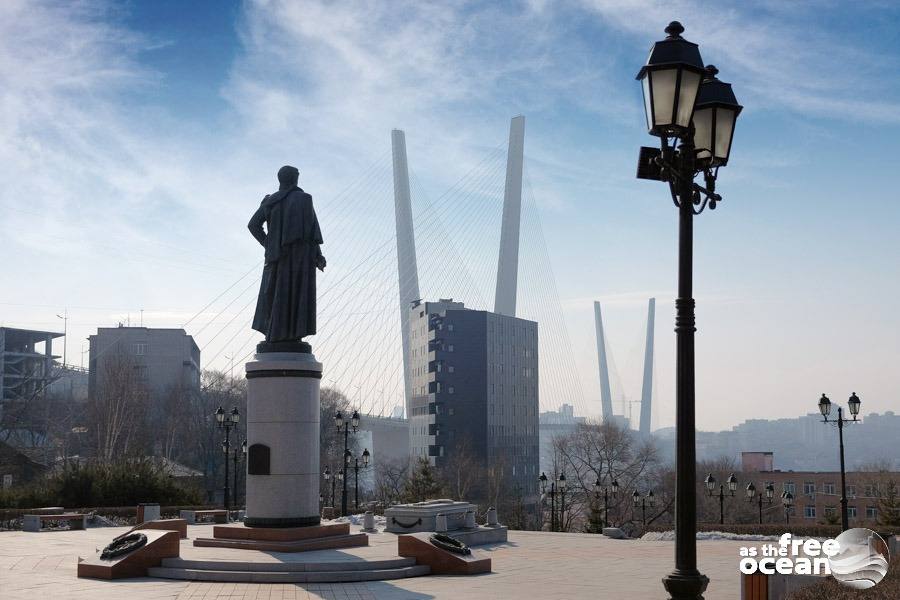
We had a short stay in Vladivostok, but enough to explore the city and get a feeling of what the Russian Federation looks like at the other end of its wide territory. You can easily observe how different cultures get mixed here. Multiple shops and signs in Asian alphabet made us feel the presence of people from East Asia, other than Russians (it is worth mentioning that before two centuries ago the city used to be a Chinese province and after the end of First World War it became a Japanese enclave for a short period of time).

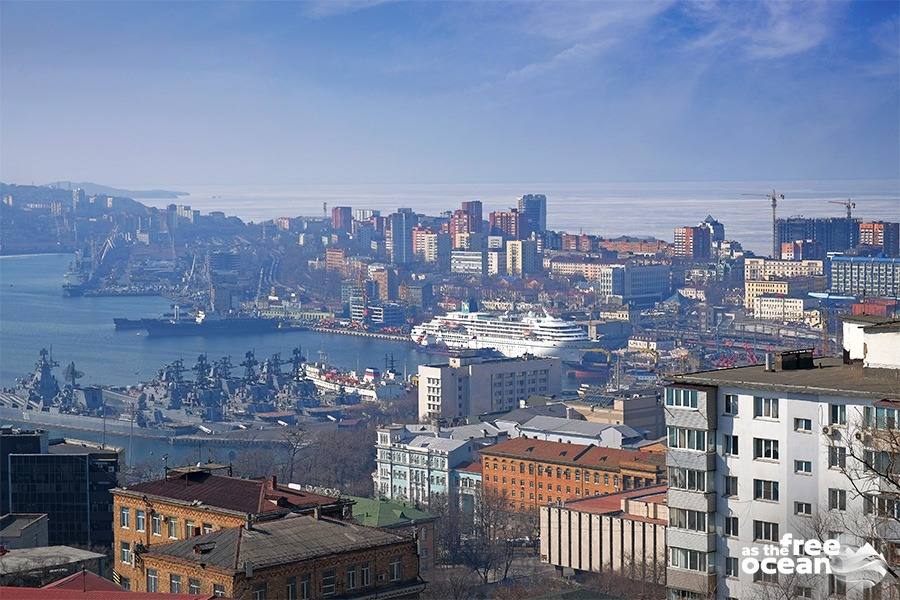
We spent the night at a small and cozy hostel that offered also a beautiful panoramic view of the city and we shared the moments of walking outside in the cold with the ones hiding in coffee places, to refresh and warm-up.

One of the pleasant experiences that we had there was the re-encounter with the ocean. The port is not one of the biggest that we have seen, but the few ships that could be spotted in the area, including a passenger ship, made the general atmosphere feel very familiar to the ones we experienced in the past.

VLADIVOSTOK RUSSIA


The last morning in Russia happened to be very cold, which helped us get easily over our nostalgia of leaving Russia behind. We took a minibus to the airport (the 107), because of the lower price, but we had to endure a bit more the cold than we were supposed to, as local buses don’t seem to respect their schedule. So, if any of you are planning a future trip leaving from Vladivostok, we suggest choosing the probably more comfortable option, and taking the train to the airport, even if a few rubles extra will have to pay for the extra comfort.

VLADIVOSTOK RUSSIA


Would you like to see more pictures? Click here.

March 6, 2018/by Ndu
http://www.freeastheocean.com/wp-content/uploads/2019/07/VLADIVOSTOK-20.jpg 600 900 Ndu https://www.freeastheocean.com/wp-content/uploads/2019/03/FREE-AS-THE-OCEAN-LOGO-WHITE-SMALL.png Ndu2018-03-06 15:37:172019-07-03 16:00:25Vladivostok, at the end of our Trans-Siberian adventure
Page 1 of 212

Pages

  • ABOUT US
  • Anmeldung English Book Club – The Little Prince
  • Blog Classic Grid
  • Coming Soon Page
  • Gallery
  • Gallery Agra
  • Gallery Argentina
  • Gallery Bagan
  • Gallery Bangkok
  • Gallery Beijing
  • Gallery Bengaluru
  • Gallery Buenos Aires
  • Gallery Bukit Lawang
  • Gallery Chile
  • Gallery China
  • Gallery Chitwan
  • Gallery Colombo
  • GALLERY COUNTRIES
  • Gallery Dambulla
  • Gallery Ella
  • Gallery Galle
  • Gallery George Town
  • Gallery Great Wall
  • Gallery Guilin
  • Gallery Hakone and Lake Ashi
  • Gallery Himalayas
  • Gallery Hiroshima
  • Gallery Hong Kong
  • Gallery India
  • Gallery Indonesia
  • Gallery Irkutsk
  • Gallery Jaipur
  • Gallery Jaisalmer
  • Gallery Japan
  • Gallery Jodhpur
  • Gallery Kamakura
  • Gallery Kandy
  • Gallery Kathmandu
  • Gallery Kuala Lumpur
  • Gallery Kuching and Bako National Park
  • Gallery Kyoto
  • Gallery Lake Toba
  • Gallery Laos
  • Gallery Lhasa
  • Gallery Listvyanka
  • Gallery Luang Prabang
  • Gallery Malaysia
  • Gallery Mandalay
  • Gallery Mekong Cruise
  • Gallery Mirissa
  • Gallery Moscow
  • Gallery Mount Ijen
  • Gallery Myanmar
  • Gallery Nara
  • Gallery Nepal
  • Gallery New Delhi
  • Gallery Nong Khiaw
  • GALLERY NORTHEAST ASIA
  • Gallery Osaka
  • Gallery Perito Moreno
  • Gallery Phuket
  • Gallery Russia
  • Gallery San Pedro de Atacama
  • Gallery Shanghai
  • Gallery South America
  • Gallery South Asia
  • Gallery Southeast Asia
  • Gallery Sri Lanka
  • Gallery Thailand
  • Gallery Tibet
  • Gallery Tokyo
  • Gallery Ushuaia
  • Gallery Vladivostok
  • Gallery Yangon
  • Gallery Yogyakarta
  • Gallery Yokohama
  • Gallery Zhangjiajie
  • Home
  • Home Test
  • Languages
  • Legal notice
  • Legal notice
  • Mailchimp Signup
  • MAIN PAGE EN
  • Maintenance mode
  • MAINTENANCE MODE
  • Nach der Anmeldung English Book Club – The Little Prince
  • Newsletter
  • Our stories/Blog
  • Packing list? The question we can not answer
  • Post Slider
  • Posts Argentina
  • Posts Chile
  • Posts China
  • Posts Hong Kong
  • Posts India
  • Posts Indonesia
  • Posts Japan
  • Posts Laos
  • Posts Malaysia
  • Posts Myanmar
  • Posts Nepal
  • Posts Peru
  • Posts Russia
  • Posts Sri Lanka
  • Posts Thailand
  • Posts Tibet
  • Privacy Policy
  • Responsible travel and how you can be a better traveler
  • Stories from around the world
  • Stories from the Ocean
  • Terms of Service
  • TEST PAGE FOR MAP
  • The Longji Rice Terraces Gallery
  • Travel ABC
  • Wie wir unsere Reisen finanzieren

Categories

  • Argentina
  • China
  • Hong Kong
  • India
  • Indonesia
  • Japan
  • Laos
  • Malaysia
  • Myanmar
  • Nepal
  • News
  • Ocean
  • Russia
  • Sri Lanka
  • Thailand
  • Tibet
  • Uncategorized

Archive

  • February 2020
  • August 2019
  • March 2019
  • February 2019
  • January 2019
  • December 2018
  • November 2018
  • October 2018
  • September 2018
  • August 2018
  • July 2018
  • June 2018
  • May 2018
  • April 2018
  • March 2018
  • February 2018
  • August 2012
  • May 2012

DISCLOSURE

Behind the links/banners etc. marked with (*) are affiliate links and advertisements. If you buy something through these links, we will receive a small commission. This will not make the product more expensive for you. We are very happy with your support.

Privacy Policy | Legal Notice | Cookies-Settings

GET IN TOUCH!

Do you have a question, a comment, or do you just have something nice to say? We want to hear from you! Leave us a message and we will reply as soon as possible. Thank you!

E-mail:  freeoceantravelers [at] gmail.com

© Free as the Ocean 2018-2021
  • Link to Instagram
  • Link to Facebook
  • Link to Youtube
Scroll to top Scroll to top Scroll to top
Manage Cookie Consent
To provide the best experiences, we use technologies like cookies to store and/or access device information. Not consenting, or withdrawing consent, may adversely affect certain features and functions.
Functional Always active
The technical storage or access is strictly necessary for the legitimate purpose of enabling the use of a specific service explicitly requested by the subscriber or user, or for the sole purpose of carrying out the transmission of a communication over an electronic communications network.
Preferences
The technical storage or access is necessary for the legitimate purpose of storing preferences that are not requested by the subscriber or user.
Statistics
The technical storage or access that is used exclusively for statistical purposes. The technical storage or access that is used exclusively for anonymous statistical purposes. Without a subpoena, voluntary compliance on the part of your Internet Service Provider, or additional records from a third party, information stored or retrieved for this purpose alone cannot usually be used to identify you.
Marketing
The technical storage or access is required to create user profiles to send advertising, or to track the user on a website or across several websites for similar marketing purposes.
  • Manage options
  • Manage services
  • Manage {vendor_count} vendors
  • Read more about these purposes
View preferences
  • {title}
  • {title}
  • {title}